Key Takeaways
- Dry eye comes from a tear film problem, not simply a lack of moisture.
- Aqueous deficient dry eye happens when your eyes make too few tears.
- Evaporative dry eye happens when your tears evaporate too quickly. It’s also more common.
- Both types can occur together, so symptoms often overlap.
- Simple tear tests and eyelid checks help point to the right care.
Dry Eye Comes in Two Forms
Your eyes feel scratchy by mid afternoon, and no amount of blinking fixes the problem. Chances are, the problem is dry eye, a condition that comes in two main forms. Aqueous deficient dry eye happens when your eyes make too few tears, while evaporative dry eye happens when your tears disappear too fast.
Our team at Focal Point can identify the cause of your discomfort and recommend a plan that meets your needs.
The Two Kinds of Dry Eye
Knowing what kind of dry eye you have is the first step towards finding relief. In fact, many people deal with a mix of both at the same time.
Aqueous Deficient Dry Eye
With this type of dry eye, your tear glands don’t produce enough fluid to keep your eyes moist. Think of a well that runs low. The output slows, and your eyes feel the shortage.
Tear production tends to drop as you get older, so this form tends to show up more in adults and seniors. Hormones also play a role, especially during and after menopause. Certain autoimmune conditions, such as Sjögren’s Syndrome, are likewise known to lower tear output.
Evaporative Dry Eye
With evaporative dry eye, the problem isn’t due to tear volume. In this form of the condition, your eyes make plenty of tears, but the quality of those tears falls short. This is usually because your tears don’t contain enough oils, often due to problems with the glands in your eyes that produce them.
Evaporative dry eye is the more common form, and it tends to get worse when you’re exposed to wind, heat, or dry air.
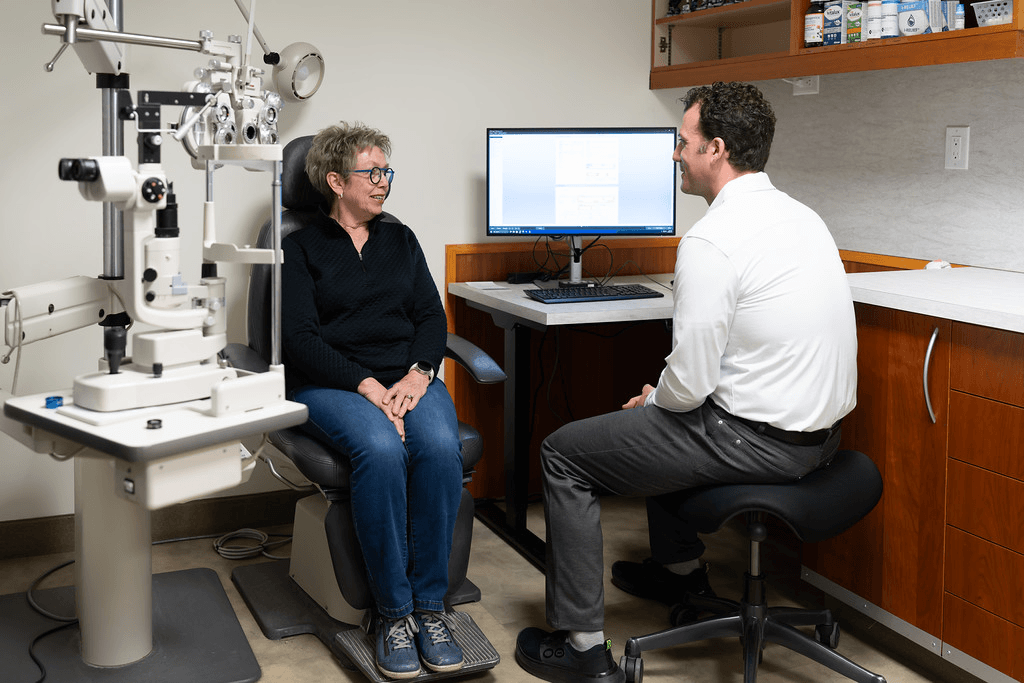
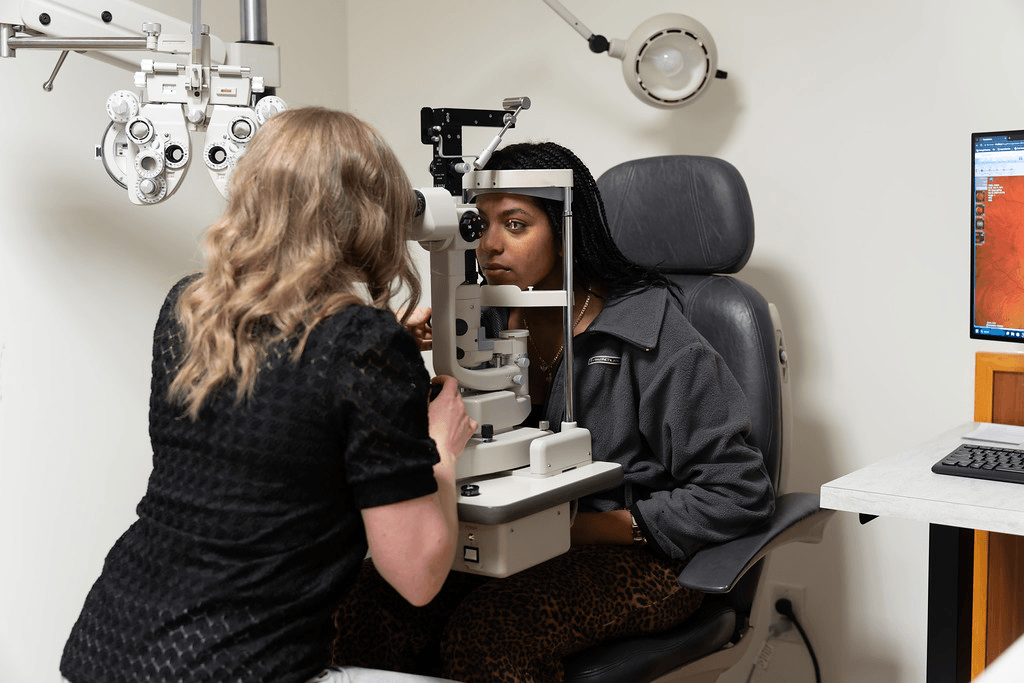
Optometrist adjusts a phoropter over a seated patient’s eyes during an eye exam in a clinic.
The Role of Meibomian Glands
The meibomian glands are tiny oil glands that line the edges of your eyelids. They produce oil that floats on top of your tears and slows evaporation.
When these glands clog or otherwise don’t work properly, your eyes get dry as a result. Skin conditions like rosacea and blepharitis both affect the meibomian glands, as do long screen sessions and environmental conditions like dry weather.
How to Tell Which Type of Dry Eye You Have
Both kinds of dry eye cause symptoms like burning, grittiness, and redness. This means that it’s hard to tell on your own which form you actually have. The best way to know for sure is to have your optometrist check your eyes.
During an eye exam, we can perform tear tests that measure the content and volume of your tears. The results can tell us whether your eyes make too little fluid or lose it too fast. We’ll also check to see if your oil glands are clogged and how well your tears spread across your eyes.
Ways to Manage & Find Relief
Relief often starts with small daily habits. These steps can reduce discomfort and support a healthier tear film.
- Reach for preservative-free artificial tears first, since they add moisture without irritating the surface of your eyes.
- Follow a daily eyelid hygiene routine to keep the edges of your eyelids and your glands clear.
- Use a warm compress or heated eye mask to loosen the oil in clogged glands.
Lifestyle Habits That Help
Drinking more water keeps your body hydrated, while adding omega-3 rich foods like salmon or flax supports the oily layer of your tears.
It also helps to take regular breaks from screens. A short pause every 20 minutes gives your eyes time to blink and recover. Getting enough sleep also helps your eyes reset and stay comfortable.
Dry eye rarely fixes itself, but the right plan can make life more comfortable. Our team at Focal Point can check which type you have and help you find relief that fits your life. Book your eye exam today and give your eyes the care they deserve.